
A modern alternative to LASIK. Engineered for your eyes.
Removable. Additive. Originally emphasized for high myopia, thin corneas, and dry eye. The new EVO model offers numerous advantages for low to moderate myopia as well. Performed by Barry S. Seibel, MD — author of Phacodynamics, the international textbook of intraocular lens surgery.
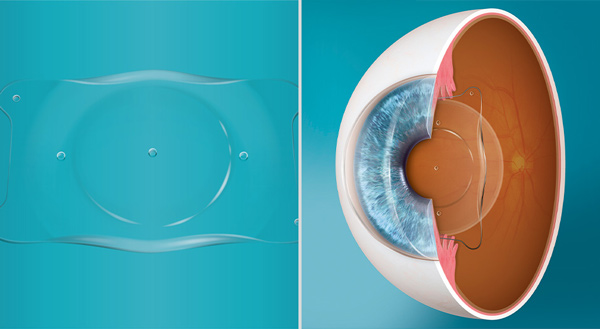
What is the EVO ICL?
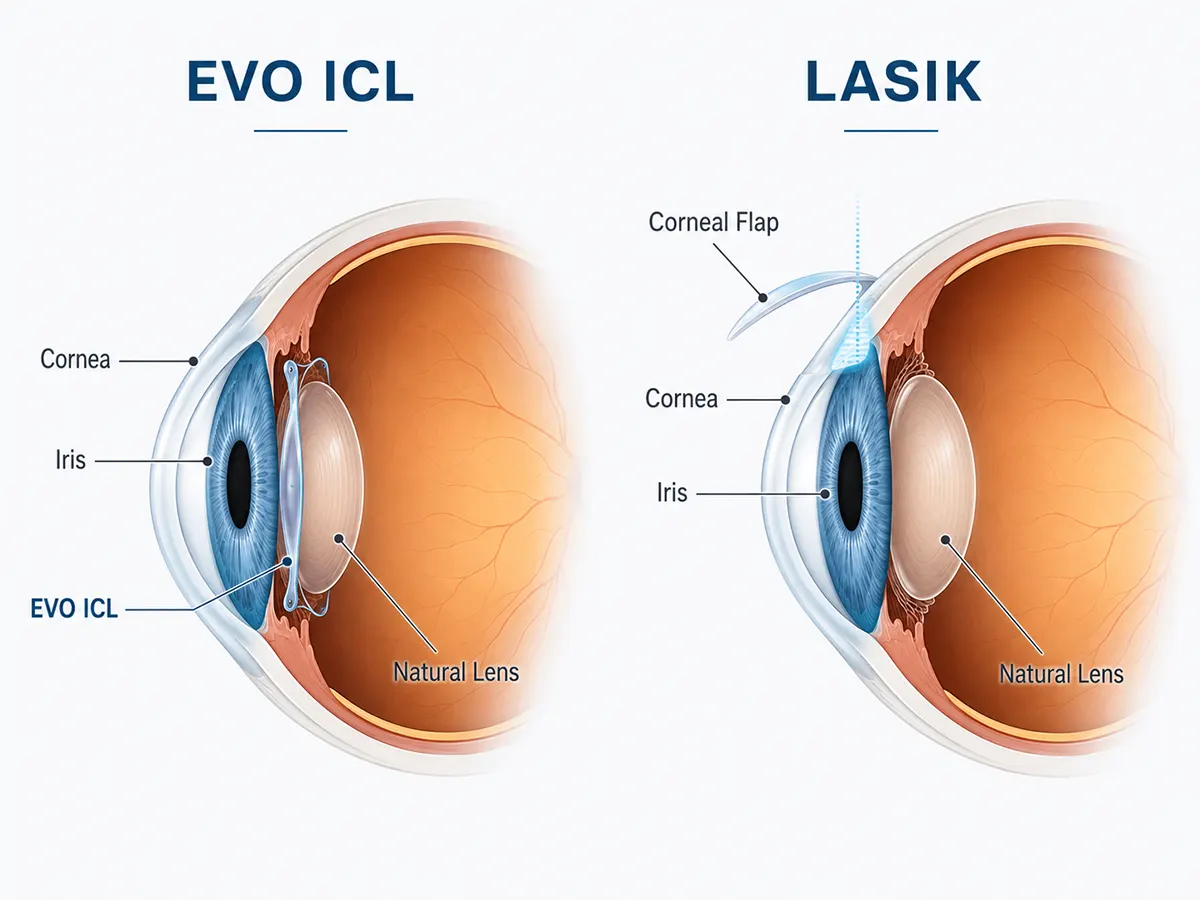
The EVO ICL (Implantable Collamer Lens) is a soft, biocompatible lens that is placed inside the eye, behind the iris and in front of the natural lens, to correct nearsightedness and astigmatism. Unlike LASIK or PRK, no corneal tissue is removed or reshaped — the EVO ICL works with your eye's existing structures and can be removed by a surgeon if your vision needs ever change.
Manufactured by STAAR Surgical and FDA-approved in the United States in 2022, the EVO Visian ICL is the next generation of an implantable lens technology that has been used in more than 75 countries since 2005. The "EVO" version added a central port that allows natural fluid flow inside the eye, eliminating the need for a separate laser iridotomy procedure that earlier ICL designs required.
For Los Angeles patients who have been told they aren't candidates for LASIK — whether because of a high prescription, thin or irregular corneas, chronic dry eye, or simply a desire to keep their natural cornea intact — the EVO ICL is often the most patient-friendly path to lasting freedom from glasses and contacts.
Why Choose Dr. Seibel for EVO ICL in Los Angeles
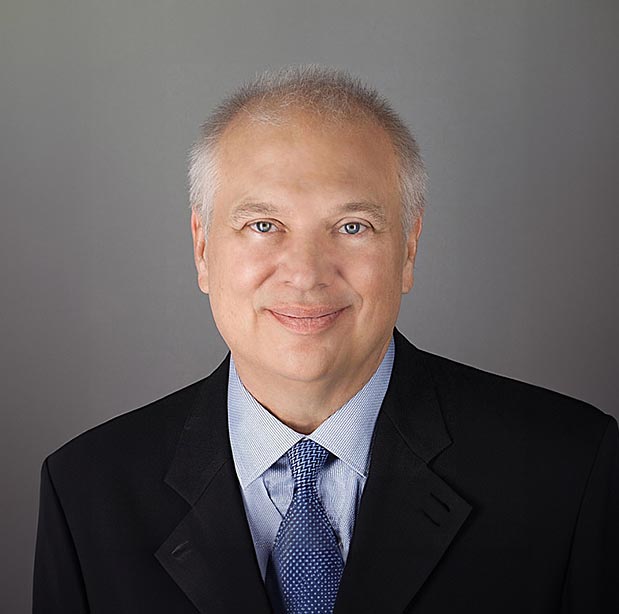
Barry S. Seibel, MD is one of the most internationally respected refractive and intraocular surgeons in Southern California. He is the sole author and illustrator of Phacodynamics — a textbook published in four editions and five languages, often described by surgeons worldwide as the foundational reference for modern intraocular lens implant surgery. He has delivered more than 300 lectures across six continents and has designed 20 surgical instruments currently used by ophthalmologists around the world.
Dr. Seibel was an investigator in the original FDA clinical trial of CustomVue LASIK and was among the first surgeons in Southern California to perform laser cataract surgery.
That same engineering-first mindset — applying fluidics, mechanics, and tissue-handling principles to every step of intraocular surgery — is exactly what the EVO ICL procedure rewards.
The lens is placed in a precise, narrow space inside the eye, and outcomes depend heavily on surgical technique, sizing accuracy, pre-operative evaluation, and post-operative monitoring.
What makes Seibel Vision Surgery different for ICL patients
- Comprehensive candidacy evaluation. Because Dr. Seibel offers the full spectrum of refractive surgery — LASIK, PRK, EVO ICL, and Refractive Lens Exchange — your consultation isn't a sales pitch for one procedure. You'll be matched to the surgery that is the best fit for your eyes and your goals.
- Engineering-driven precision. The same Phacodynamics principles Dr. Seibel teaches to other surgeons are applied to your ICL placement, sizing, and follow-up care.
- Industry-leading peer recognition. Dr. Seibel is regularly consulted by ophthalmic device companies during the development of new intraocular technologies.
- Convenient Santa Monica location. Our office in Saint John's Medical Plaza is easily accessible from Brentwood, Pacific Palisades, Westwood, Beverly Hills, Marina del Rey, and the greater Westside.
Seven Reasons Patients Choose EVO ICL Over LASIK
LASIK remains an outstanding procedure for the right candidate, and Dr. Seibel has performed it for decades. But for many Los Angeles patients — including those with stronger prescriptions, thinner corneas, or dry-eye-prone lifestyles — EVO ICL offers a fundamentally different value proposition.
It's additive, not subtractive
LASIK and PRK work by removing corneal tissue. The EVO ICL adds a microthin lens inside the eye and leaves your cornea fully intact — preserving its natural strength and biomechanics for life.
It's removable
If your vision changes years from now — or new technology emerges — the EVO ICL can be surgically removed or exchanged. Reshaped corneal tissue from LASIK cannot be put back.
Excellent for high myopia
EVO ICL is FDA-approved for nearsightedness from −3.0 to −20.0 diopters. Patients with prescriptions beyond LASIK's safe range often see their best vision ever after ICL.
Excellent for low to moderate myopia
The new EVO model tremendously reduces the already low risk of cataracts and eye pressure rises compared to the original ICL, and eliminates the need for the laser iridotomies that were required with the original ICL.
Friendlier to dry eye
LASIK temporarily disrupts corneal nerves and frequently worsens dry eye symptoms — a real issue in the dry, warm Los Angeles climate. EVO ICL doesn't touch the cornea.
Built-in UV protection
The Collamer material the lens is made from contains an ultraviolet light filter, providing year-round UV protection for the inside of your eye — a meaningful benefit for Southern California life.
Sharp, high-definition vision
Patients in the FDA clinical trial reported exceptional quality of vision, with many describing it as crisper and more vivid than they ever experienced with glasses or contacts.
EVO ICL vs. LASIK vs. PRK
This table summarizes the practical differences between the three most common refractive surgery options Dr. Seibel offers at Seibel Vision Surgery. Your candidacy evaluation will determine which is best for you.
| Feature | EVO ICL | LASIK | PRK |
|---|---|---|---|
| Surgical approach | Adds a lens inside the eye | Reshapes corneal tissue with a flap | Reshapes corneal surface, no flap |
| Removable / reversible | Yes | No | No |
| Treatment range (myopia) | −3.0 to −20.0 D | Up to ~−8.0 to −10.0 D | Up to ~−8.0 to −10.0 D |
| Suitable for thin corneas | Yes | Often no | Sometimes |
| Dry-eye risk | Minimal — cornea untouched | Higher, can be lasting | Higher short-term |
| Visual recovery | Often next day | Often next day | 3 to 7 days for functional vision |
| UV protection built in | Yes | No | No |
| Treats astigmatism | Yes (Toric EVO ICL) | Yes | Yes |
| Procedure time, both eyes | ~30 minutes | ~15 minutes | ~15 minutes |
| Anesthesia | Topical drops + mild sedation | Topical drops | Topical drops |
Note: Prescription ranges and recovery timelines are general guidelines from FDA labeling and clinical literature. Individual results vary based on anatomy, ocular surface health, and surgeon technique.
Who Is a Good Candidate for EVO ICL?
The ideal EVO ICL candidate is between 21 and 60 years old, has a stable nearsighted prescription between −3.0 and −20.0 diopters (with or without astigmatism up to about 4.0 D), and has healthy eyes free of cataracts, severe glaucoma, or active retinal disease. EVO ICL can be particularly well-suited to patients who have been turned away from LASIK.
You may be an excellent candidate if you:
- Were told you aren't a LASIK candidate due to high prescription, thin corneas, or irregular corneal topography
- Struggle with chronic dry eye from contact lens wear or environmental factors
- Have keratoconus suspect findings or borderline corneal thickness
- Want a procedure that doesn't permanently alter your cornea in case future technology becomes available
- Have an active lifestyle — surfing, cycling, hiking the Santa Monica Mountains, working out — and are tired of glasses fogging or contacts drying out
- Are an actor, performer, or on-camera professional for whom contact lenses are inconvenient and glasses interfere with work

When EVO ICL may not be right for you
EVO ICL is generally not recommended for patients over 45 who are starting to develop presbyopia or early cataracts (Refractive Lens Exchange may be a better fit), patients with shallow anterior chambers, or those with uncontrolled glaucoma or significant endothelial cell loss. A thorough consultation will determine your best option.
Your EVO ICL Procedure, Step by Step
From your first measurement to your one-year follow-up, here's exactly what to expect at Seibel Vision Surgery.
Consultation & measurements
Comprehensive imaging — corneal topography, anterior segment OCT, and white-to-white measurements — at our Santa Monica office. This is where Dr. Seibel determines the precise EVO ICL size for your eye anatomy. Correct sizing is what produces excellent long-term outcomes.
Lens ordering
Each EVO ICL is custom-ordered to your specific prescription and eye dimensions by STAAR Surgical. Lenses typically arrive within 2 to 3 weeks.
Surgery day
The procedure is performed in our accredited surgical facility and takes approximately 15 minutes per eye. Numbing eye drops and mild oral sedation keep you comfortable. Both eyes are usually treated on the same day.
Lens placement
Using microsurgical instruments that he invented, Dr. Seibel makes a small, self-sealing micro-incision at the edge of the cornea. The folded EVO ICL is gently inserted and unfolds into position behind the iris, in front of your natural lens. There are no stitches.
Same-day discharge
You'll rest briefly in our recovery area, then go home with a friend or rideshare. Most patients describe noticing improved vision within a few hours.
Follow-up care
You'll see Dr. Seibel the day after surgery, then at one week, one month, and six months. Long-term follow-up every one to two years monitors lens position and the health of your eye's interior structures.
Recovery and Visual Results
Most EVO ICL patients experience dramatic vision improvement within hours of surgery and notice continued sharpening over the first few days. You'll use anti-inflammatory and antibiotic eye drops for about a week and avoid swimming pools, hot tubs, and strenuous exercise for one to two weeks. Most patients return to office or remote work within one to two days.
In FDA clinical trials of the EVO Visian ICL, patient-reported satisfaction was among the highest reported for any refractive procedure, with the overwhelming majority describing their vision quality as good to excellent and saying they would have the procedure again.

EVO ICL Cost in Los Angeles
EVO ICL is generally more expensive than LASIK because the lens itself is custom-manufactured and the procedure involves the use of a sterile operating room. In the Los Angeles market, EVO ICL pricing typically ranges from approximately $4,500 to $5,500 per eye, depending on whether you need the standard or toric (astigmatism-correcting) version and what is included in the surgical fee.
At Seibel Vision Surgery, we provide a complete, transparent quote at the time of your consultation that includes pre-operative measurements, the lens itself, the surgical facility, anesthesia, surgeon's fee, and all post-operative visits for the first year. We offer financing through CareCredit with affordable monthly payments, and HSA and FSA dollars can typically be applied toward the procedure.
Serving the Greater Los Angeles Area
Seibel Vision Surgery is located at 1301 20th Street, Suite 260, in Santa Monica's Saint John's Medical Plaza — a central Westside location near St. John's and UCLA Santa Monica hospitals, easily accessible from across the Westside, Beach Cities, and beyond. Patients regularly travel to our office from:
EVO ICL Frequently Asked Questions
Tap any question to expand. Have a question that isn't answered here? Call us at 310-444-1134.
Is EVO ICL better than LASIK?
EVO ICL is better than LASIK for specific patients — particularly those with high myopia (above about −8.0 diopters), thin or irregular corneas, chronic dry eye, or a desire to keep their cornea unaltered. For patients with mild-to-moderate prescriptions and healthy corneas, LASIK is usually faster and less expensive; however, for these patients EVO ICL still has numerous advantages over LASIK, including reversibility, a low risk of inducing dry eye syndrome, and preservation of corneal tissue that maximizes options for potential future eye procedures, such as cataract surgery typically decades later. There is no universal "better" — there is only what is better for your eyes, which is exactly what your consultation with Dr. Seibel is designed to determine.
Can you feel the EVO ICL inside your eye?
No. The EVO ICL is positioned behind the iris and in front of the natural lens, where there are no nerve endings that can sense it. Patients do not feel the lens, see the lens, or have any awareness it is there during normal activities.
How long does the EVO ICL last?
The EVO ICL is designed to remain in the eye permanently, but it can be removed or exchanged at any time if needed. The Collamer material does not degrade and the lens does not need to be replaced on a schedule. If a patient develops a cataract decades later, the EVO ICL is simply removed at the time of cataract surgery.
What's the difference between EVO ICL and Visian ICL?
EVO ICL is the next-generation version of the Visian ICL. The key upgrade is a small central port in the lens called KS-AquaPORT that allows the eye's natural fluid to flow freely. This eliminates the need for a separate iridotomy procedure that older Visian ICL patients required before surgery. The EVO ICL was FDA-approved in the United States in March 2022.
Is EVO ICL surgery painful?
EVO ICL surgery is not painful. Numbing eye drops are used throughout the procedure, and most patients receive a mild oral sedative beforehand. Patients typically describe sensations of pressure or seeing colored lights, but not pain. Some mild scratchiness or light sensitivity is normal for a few hours afterward and resolves quickly.
What about reflections or halos after EVO ICL?
Visual side effects such as halos, glare, or reflections (known as dysphotopsias) are common after EVO ICL but seldom clinically significant. They tend to be mild, often diminish over the first 3 to 6 months, coexist with high patient satisfaction, and only in exceptional cases lead to removal of the lens. For higher-myopia, toric-lens, and older patients, halos are the most likely — and most persistent — symptom. Correct lens sizing and vault can minimize the risk.
Will I still need reading glasses after EVO ICL?
EVO ICL corrects distance vision and astigmatism but does not correct presbyopia, which is the age-related need for reading glasses that begins in the mid-40s. Patients in their 40s or older considering vision correction surgery may be better candidates for Refractive Lens Exchange, which Dr. Seibel can also discuss with you. Younger patients who get EVO ICL today will eventually need reading glasses or another procedure when presbyopia develops.
How quickly can I drive and return to work after EVO ICL?
Most EVO ICL patients are legally able to drive within 24 hours of surgery and return to office or remote work within one to two days. Vigorous exercise, swimming, and eye makeup should be avoided for one to two weeks. Dr. Seibel will provide a personalized timeline based on your healing.
Does insurance cover EVO ICL?
Like LASIK and other refractive surgeries, EVO ICL is considered elective and is generally not covered by medical insurance. However, HSA and FSA accounts can be used to pay for the procedure, and many patients use CareCredit financing to spread payments out over 12 to 24 months. Some employer vision plans offer modest discounts on refractive surgery — our team can help you check yours.
Is the EVO ICL safe long-term?
The Visian/EVO ICL platform has been used worldwide for more than 20 years, with more than two million lenses implanted. FDA clinical trials and long-term studies in Europe and Asia have shown a strong safety profile. The most important long-term considerations are correct lens sizing at the time of surgery and routine monitoring of the eye's internal structures during follow-up — both of which are central to how Dr. Seibel manages every ICL patient.
How do I know if I'm a candidate for EVO ICL in Los Angeles?
The only way to know with certainty is a comprehensive refractive consultation that includes corneal topography, anterior segment imaging, and a measurement of your anterior chamber depth and white-to-white distance. To schedule your consultation at Seibel Vision Surgery in Santa Monica, call 310-444-1134 or request an appointment online.
Ready to See What's Possible?
Schedule a consultation with Dr. Barry S. Seibel at our Santa Monica office and find out whether EVO ICL — or another refractive option — is the right fit for your eyes and your life.